Igaguri
by Fukui Eiichi
Info
New Cover
A Few Thoughts
I bought Igaguri: Young Judo Master last winter from Bubbles Zine on a whim (along with Bat Kid) and have been reading one installment every week or so. It's been a fun ritual, but what I didn't expect by the end was a weird sense of vertigo at realizing how influential this simple comic was and what it cost its artist, Fukui Eiichi, who died at age 33 from overwork.
Translator Ryan Holmberg introduces Igaguri with an 80(!)-page essay explaining the context of post-war Japan and the pressures placed on Fukui. A common practice back then was called "canning," where editors would lock their artists in a hotel room for days, supplying them with food, drink, and often an assistant editor to make sure they didn't sleep too long, only allowing them to leave when they had completed their assignment.
Artists called it "canning" due to the intense pressure they felt. And often these artists worked for multiple competing publications, so when one editor "canned" them, they likely fell behind on their other assignments. This created a cycle where, once an artist was released, another editor "canned" them to hit their deadline. Fukui's wife recalls going from publication to publication with their two young children in tow to figure out where her husband was being kept to make sure he was eating.
One night while "canned," Fukui, a heavy drinker, went out to blow off some steam with a fellow artist. He returned early in the morning, and the following day he passed due to stress, alcohol, and an undiagnosed heart condition.
What came out of this pressure cooker was Igaguri, a heartwarming, wholesome children's comic. Its titular character, a young judo practitioner, navigates his very typical post-war Japanese life. He deals with bullies, makes friends, mourns his late mother, and helps his father around the family barber shop.
What made Igaguri so foundational to all manga that followed was a combination of a distinctly Japanese subject and new illustration techniques.
During the occupation, art could not contain anything that resembled nationalism: no harkening back to ideals like honor, no weapons, and no martial arts. The result was a lot of fantastical stories, like robots (e.g., Astro Boy) and lions in the jungle (e.g., Kimba).
In contrast, Igaguri came out just after the occupation allowing it to feature judo, a Japanese martial art that just about every boy in Japan knew due to compulsory education. The story was also very grounded in a reality that any young boy in post-war Japan could relate to. Some of Igaguri's friends are orphaned and some collect scrap metal to sell in order to fend off loan sharks.
Post-war Japan was also a time when movies were increasingly a big deal, Disney and Kurosawa in particular. Fukui himself was a former animator, so he was heavily inspired by both directors. And he had the chops to back it up, applying his experience with framing shots and drawing fluid movements to his panels.
Combine a grounded reality, a dynamic illustration style, and a few new storytelling techniques (e.g., mounting tension and cliffhangers), and you've got a blockbuster on your hands. Holmberg explains that many manga tropes got their start here, like enemies-to-friends, the literal "power of friendship," and steady improvement through discipline.
It's a fun, light read that, alongside Holmberg's essay, provides a compelling snapshot of life in post-war Japan. It's insane how a relatively simple story about an honorable young judoka changed the future of Japanese pop culture. Doubly so that Fukui accomplished this while so young.
Related:
Cover Notes
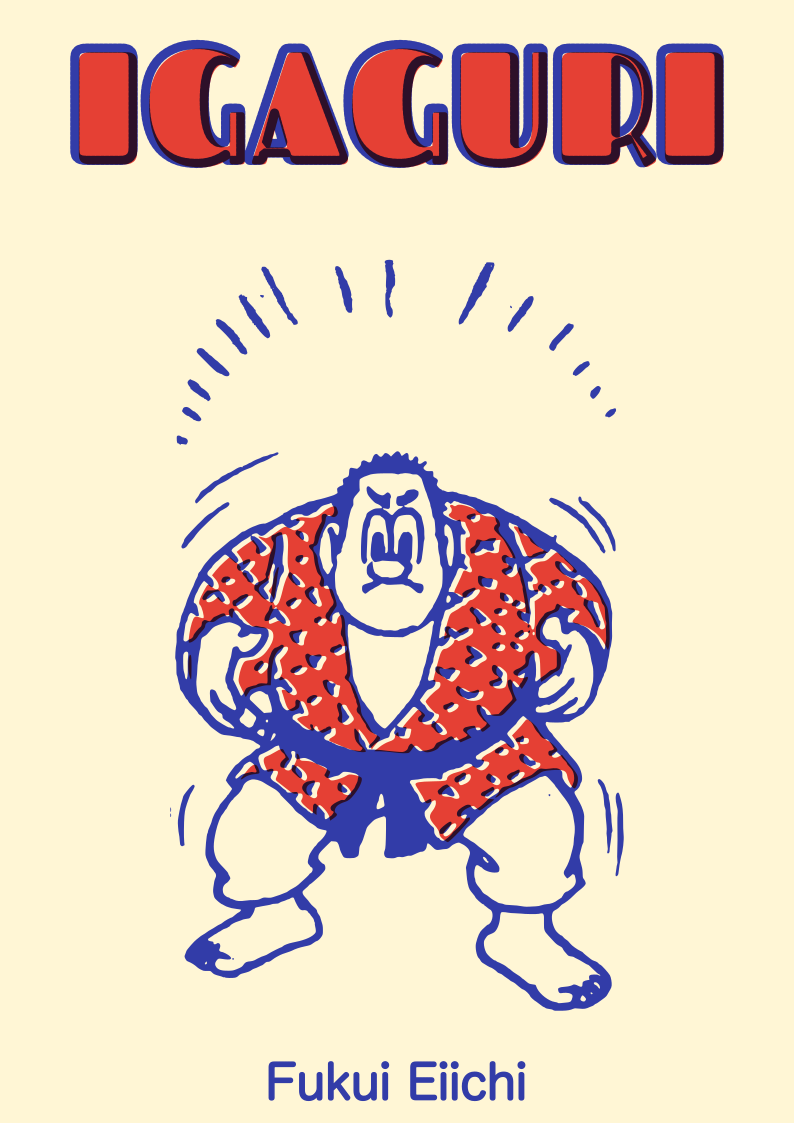
I picked one of my favorite panels then used Inkscape to apply a risograph technique I've been wanting to try.
Previously On Cover2Cover
August
Morning Star ᛫ Haiku in English The First Hundred Years ᛫ Golden Son ᛫ Blood Meridian ᛫ Bat Kid ᛫ Igaguri ᛫ Best Served Cold
July
June
Cloud Atlas ᛫ Do Androids Dream of Electric Sheep ᛫ Piranesi ᛫ The One Hand and The Six Fingers
May
Hobbit Virtues ᛫ Last Argument of Kings ᛫ The Tomb
April
The Wrestler ᛫ Before They Are Hanged ᛫ The Blade Itself ᛫ Abhorsen ᛫ Pet Semetary ᛫ An Invitation from a Crab
March
February
Words of Radiance ᛫ The Carrier Bag Theory of Fiction ᛫ Lirael
January
The End of Burnout ᛫ The Sword of Shannara ᛫ Enshittification ᛫ Ubik ᛫ The Way of Kings