Do Androids Dream of Electric Sheep
by Philip K. Dick
Info
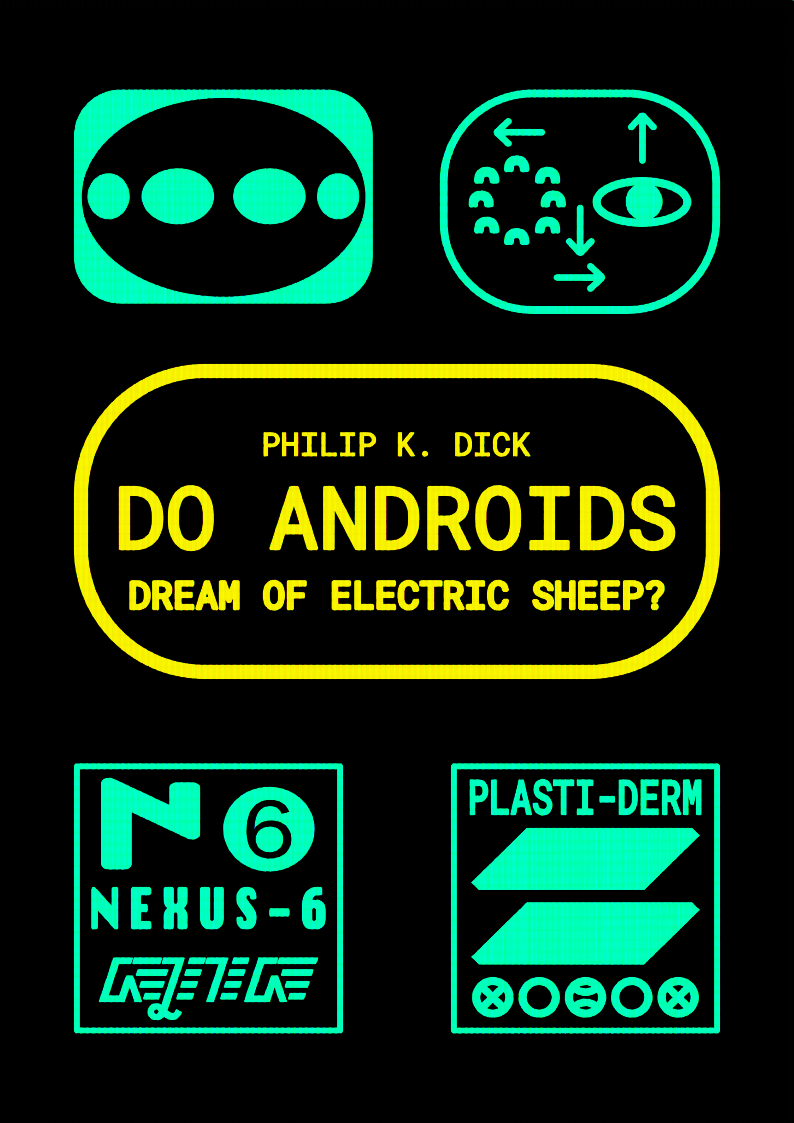
New Cover
A Few Thoughts
I can't believe I haven't read Do Androids Dream of Electric Sheep earlier. The Blade Runner movies were COVID comfort watches, so I might've seen them more than any other set of movies besides The Lord of the Rings. And I love Dick's work; earlier this year, Ubik rocketed up to become one of my favorite books.
Well, you can add Androids to that list. While the story is similar, the book has much goofier, more nuanced, and more striking ideas than the movies. What is the nature of faith? Is the simulation of empathy the same as the real deal? Does an electric toad eat electric flies?
There is so much I want to write about in longer form. Little things, like how Dick describes human reactions as mechanical: "adrenal glands pumping." The way it seems everyone talks past each other (except Isidore?). How Dick depicts art, particularly in the presence of an android.
One obvious core idea I picked up on during this read-through is a question: is what makes us human our ability to think and reason, or is it our ability to empathize? Specifically, empathize with others, from humans to spiders to androids?
But there's a lot left in this book I need to keep thinking about. Like, who is Wilbur Mercer, and what is Dick trying to say with Mercerism?
Feels to me like a sort of analysis on how religion and faith form, become a glue for society, then turn more personal and individual. Or how the truth of something doesn't change its effect on society. Or something. I don't know.
I need to talk to someone about all this. Read this book! So I can talk about it with you.
It's a short, enthralling, sometimes confusing read. And it'll stick with you.
Cover Notes
Used Inkscape for this one, replicating by hand some of the symbols here and adding unicode type code. Then did a CRT overlay. Pretty fun! Liked using Inkscape a lot better than GIMP.
Previously On Cover2Cover
August
Morning Star ᛫ Haiku in English The First Hundred Years ᛫ Golden Son ᛫ Blood Meridian ᛫ Bat Kid ᛫ Igaguri ᛫ Best Served Cold
July
June
Cloud Atlas ᛫ Do Androids Dream of Electric Sheep ᛫ Piranesi ᛫ The One Hand and The Six Fingers
May
Hobbit Virtues ᛫ Last Argument of Kings ᛫ The Tomb
April
The Wrestler ᛫ Before They Are Hanged ᛫ The Blade Itself ᛫ Abhorsen ᛫ Pet Semetary ᛫ An Invitation from a Crab
March
February
Words of Radiance ᛫ The Carrier Bag Theory of Fiction ᛫ Lirael
January
The End of Burnout ᛫ The Sword of Shannara ᛫ Enshittification ᛫ Ubik ᛫ The Way of Kings